
The Taliban are claiming to have taken over the presidential palace in Kabul.
President Ashraf Ghani left the country earlier on Sunday – but the exact situation at the palace is still unclear.
According to local journalist Bilal Sarwary who spoke to two Afghans involved in direct negotiations, part of the agreement was that Ghani would join the transition of power ceremony inside the palace – but instead he and his senior aides left the country.
“Palace employees were then reportedly told to leave and the palace was [left] empty,” the aides said. The Taliban later told the Reuters news agency that they had taken it over.
There has been no confirmation from government officials.
A top official said, Ghani fled the country, effectively ceding power to the Taliban as they reached the capital Kabul to seal a nationwide military victory in just 10 days.
“President Ghani has left the nation, leaving the people to this situation,” Abdullah Abdullah, who heads the peace process, said in a video on his Facebook page.
“God hold him accountable, and the people will have their judgement.”
“God hold him accountable, and the people will have their judgement.”
He gave no indication where Ghani was going, but leading Afghan media group Tolo news suggested he was heading to Tajikistan.
Ghani’s departure from office was one of the key demands of the Taliban in months of peace talks with the government, but he had stubbornly clung to power.
In just over a week, the Taliban have carried out a lightning sweep of the country, with troops incapable of holding onto territory without US military support.
The insurgents said they want a “peaceful transfer” within the next few days, two decades after US-led forces toppled it in the wake of the September 11, 2001 attacks.
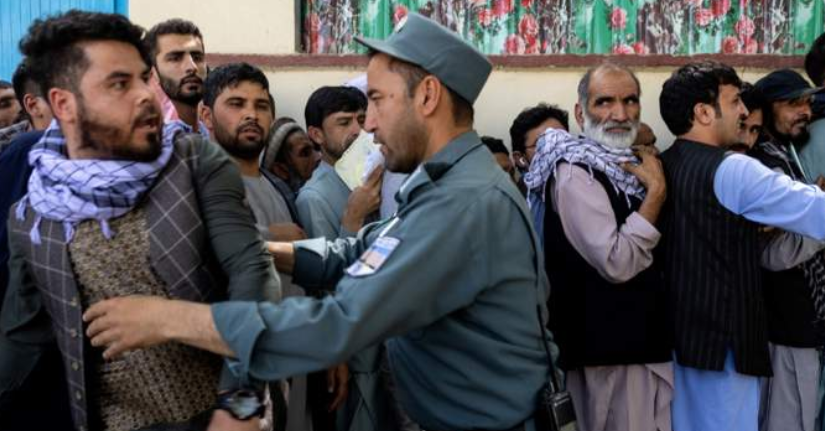
The Taliban’s imminent takeover triggered fear and panic in Kabul among residents fearful of the group’s hardline brand of Islam.
group ordered its fighters earlier Sunday not to enter the capital, saying the remnants of the government’s forces were responsible for security.
But later, a spokesman tweeted that Taliban forces should enter areas deserted by Afghan forces in order to maintain law and order.
“God forbid the common thieves and robbers in Kabul do not mix, the abusers do not harm the people, the Islamic Emirate ordered its forces to enter the areas of Kabul from which the enemy went,” a statement by the Taliban said.
“There is a risk of theft and robbery.”
here are fears of a security vacuum in the capital as thousands of police and other armed services members have abandoned their posts, uniforms, and even weapons.
The United States began moving its citizens and Afghan staff to Kabul airport, with the help of thousands of troops deployed to the capital to assist with the evacuation.
However, Secretary of State Antony Blinken on Sunday dismissed comparisons with the chaotic American departure from Saigon in 1975.
The fact of the matter is this: We went to Afghanistan 20 years ago with one mission in mind,” he said.
“That was to deal with the people that attacked us on 9/11. That mission has been successful.”
I was the fourth president to preside over an American troop presence in Afghanistan — two Republicans, two Democrats. I would not, and will not, pass this war onto a fifth,” Joe Biden said.
Ghani’s government was left completely isolated on Sunday after the insurgents overran the anti-Taliban northern stronghold of Mazar-i-Sharif and the eastern city of Jalalabad.
Like with most of the other captured cities, the seizure of power came after government forces surrendered or retreated.
Videos posted on pro-Taliban social media accounts showed the group’s heavily armed fighters in cities across the country, waving white flags and greeting locals.
Most of the fighters appeared young, suggesting they were most likely infants or unborn when the Taliban was toppled from power in 2001.