
The Speaker of the Representatives Rt. Hon. Abbas Tajudeen, Ph.D., has stated that Nigeria’s economic growth must translate to job creation, higher income, and more opportunities for the citizens, promising quick and diligence diligence consideration of 2026 Appropriation Bill.
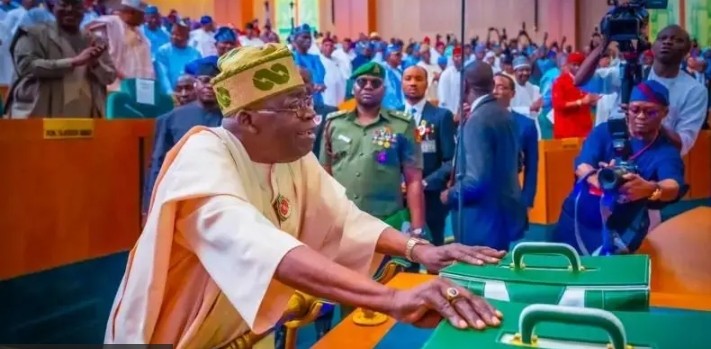
President Bola Ahmed Tinubu on Friday 19th December presented ₦58.1 trillion as 2026 budget proposal to the joint session of National Assembly
He pegged the capital expenditure at ₦26.08 trillion and crude oil benchmark at US$64.85 per barrel.
He said the expected total revenue is ₦34.33 trillion; ₦15.52 trillion for debt servicing. The budget deficit is ₦23.85 trillion, representing 4.28% of GDP.
Crude oil production at 1.84 million barrels per day, and an exchange rate of ₦1,400 to the US Dollar for the 2026 fiscal year.
The budget tagged :Budget of Consolidation, Renewed Resilience and Shared Prosperity” has
₦5.41 trillion for defence and security with the lion’s share while infrastructure got ₦3.56 trillion.
Education received ₦3.52 trillion, while health received ₦2.48 trillion in the proposal.
Speaker Abbas in a closing remark during the joint session, emphasised fiscal discipline, stating that it must engender fairness, efficiency, and visible impact.
He called for credible targets and realistic assumptions in the 2026 fiscal year while calling for thorough implementation of the year’s budget.
Speaker Abbas said, “The challenge before us now is not whether reform is working, but how decisively its benefits can be consolidated and broadened. If 2025 was a year of adjustment and learning, 2026 must be a year of fulfilment.
“Growth must increasingly translate into jobs, higher incomes, and expanded opportunity. Fiscal discipline must continue to deliver fairness, efficiency, and visible impact. Above all, the 2026 budget must be grounded in credible targets, realistic assumptions, and disciplined implementation. This is why there is strong optimism across this chamber that 2026 will be different, not only in intent but in outcomes.”
He added, “The National Assembly receives the 2026 Appropriation Bill with confidence that the lessons of 2025 have been fully internalised and that this budget is designed to translate reform into tangible progress for Nigerians.”
The Speaker noted that one of the most reassuring signals of reform maturity in President Tinubu’s approach to the 2026 budget is his clear directive that Nigeria must operate with one budget and one fiscal framework, along with the President’s clear determination to deepen fiscal realism and restore order to the budgeting process.
“Your insistence that there should be no parallel budgets, no multiple spending windows, and no fragmented fiscal authorities speaks to discipline, clarity, and respect for due process. It restores order to public finance and ensures that every Naira appropriated by this Parliament aligns with national priorities,” Speaker Abbas said.
The Speaker stated that “the National Assembly welcomes this stance” and reinforces the confidence that the 2026 budget is “not merely expansive, but orderly; not merely ambitious, but disciplined.”
He stressed that the approach reassures the National Assembly that the 2026 budget “is not only ambitious but also achievable, not only expansive but also grounded, and designed for precise implementation rather than approximation.”
Speaker Abbas also noted that the Tinubu administration’s declaration of emergency on security reflects clarity of purpose and decisiveness of leadership.
He said the declaration is backed by concrete commitments, including expanded recruitment into the security services, enhanced training capacity, improved welfare, redeployment to priority theatres, strengthened forest and territorial security, and improved intelligence coordination.
He declared, “Security is not only a constitutional responsibility; it is the essential foundation of development. Security underpins food production, price stability, investment confidence, and social cohesion.
The Speaker further noted that the 2026 budget “reflects this prioritisation, and rightly so.” He added that when properly funded, well coordinated, and transparently implemented, “security expenditure is not just a cost; it is an investment in economic growth and development.”
He said, “For this reason, security deserves prominent and sustained attention in the 2026 budget and beyond. The National Assembly is firmly committed to ensuring that resources allocated to security translate into measurable, lasting improvements in safety across the federation.”
Speaker Abbas posited that the 2026 fiscal year is also significant for the implementation of new tax laws. “These reforms represent a major step in state-building. They broaden the tax base, enhance equity, simplify compliance, reduce leakages, and strengthen non-oil revenues,” he said.
With these reforms, Speaker Abbas said the 2026 budget is anchored in sustainable revenue rather than deferred obligations. He added that the budget finances progress responsibly.
“A fair and efficient tax system underpins security funding, sustains social services, and guarantees the timely delivery of constituency projects,” he stressed.
The Speaker told President Tinubu: “On behalf of the National Assembly, I offer this assurance: We will consider the 2026 Appropriation Bill with urgency, diligence, and patriotism. We will support reform that strengthens the national interest, scrutinise spending to ensure accountability, and insist that every naira budgeted by Mr. President delivers value to the Nigerian people.”
Speaker Abbas also said, “To Nigerians watching, the message of this budget is clear. Stability has been restored. Confidence has been rebuilt. Fiscal order has been strengthened. The foundations for shared prosperity are firmly in place.”