
State Creation, Power Devolution, LG Autonomy, Traditional Rulers Roles among 16 Items for Constitution Review
BY OBUTE JAMES
President of the Senate, Senator Ahmad Lawan said obvious flaws in the 1999 Constitution of Federal Republic of Nigeria make it mandatory for the 9th National Assembly to embark on its review.
The amendmet to the 1999 Constitution is around 16 items – State Creation, Power Devolution, LG Autonomy, Traditional Rulers Roles in GovernmenNasarawa among others.
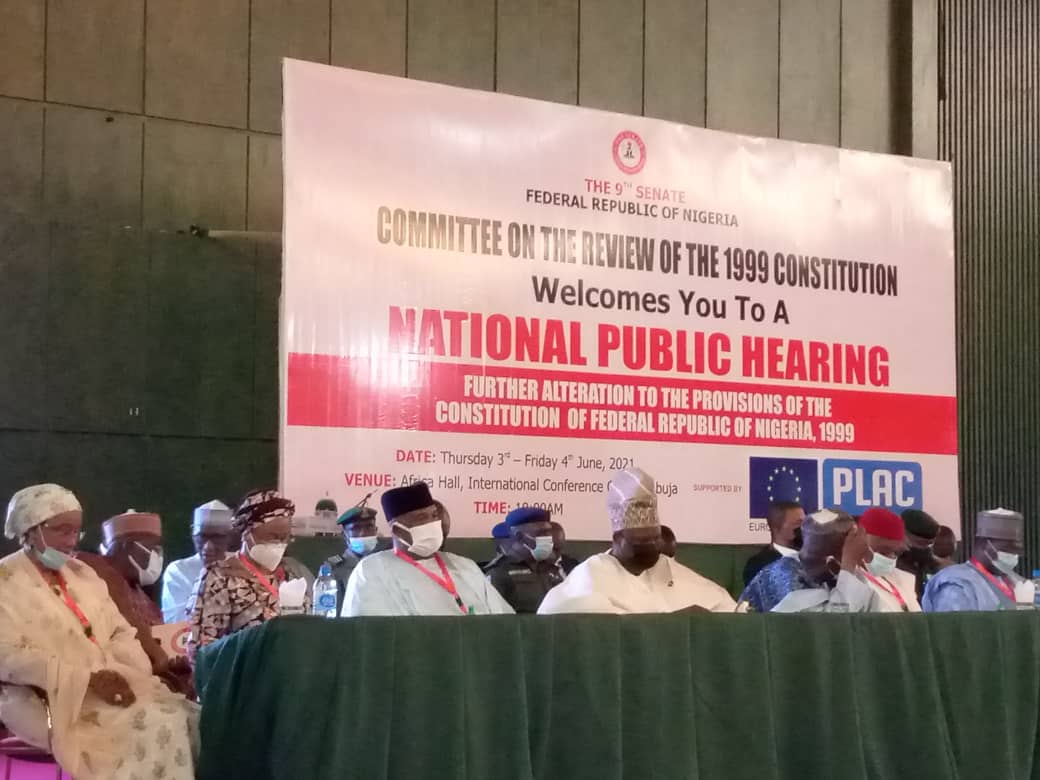
Lawan advised Nigerians with pressing views to build a national consensus around them to ensure the amendment of the constitution in their favour by the National Assembly and State Parliament.
Lawan gave the advise on Thursday while declaring the National Public Hearing on the alteration to the provisions of the 1999 Constitution in Abuja.
According to him, the constitution review exercise embarked on by the 9th Assembly was imperative in view of existent flaws in its provisions which has attracted agitations.
He said, “Our country has been consistently reminded that there are flaws in our constitution.
“There is a deep concern among legislators and other stakeholders, just as there are divergent opinions on what we should do to remedy the flaws.
The Senate President observed that such agitations and constitutional amendment proposals were focused on devolving more powers to subnational governments, for resource control, greater representation and participation of women in governance and public life, return to the regional system of the post-independence era, creation of additional states and Local Government, enhanced residency and indigene rights, decentralized policing, and Local government autonomy, amongst others.
He stressed that while the National Assembly has identified certain items as thematic areas, it remains open to engagement on any other relevant proposals.
Lawan, therefore, advised that such agitations be built around a national consensus needed to amend the provisions of the Constitution in line with their expectations.
“It is important to similarly note that agitations are democratic expressions and indications of dissatisfaction with our extant Constitution.
“Honestly engaging with each other, amid a good faith, is the best way forward.
“[And] at this point, I want to take this opportunity to appeal to all Nigerians, especially those that hold strong views, that what we need to do is to build consensus around those views – National Consensus.
“That is the hallmark of statesmanship, and that is the best way to handle the National Assembly and, indeed, the state legislatures to amend the Constitution as they desire.
“We recognise in the National Assembly that the underlying role of participatory democracy is not to replace representative democracy, but to supplement it and make it function better.”
The Senate President further advised that the constitution review exercise be backed by the requisite political will and the right attitute.
He emphasised that the final product of the exercise would be shaped by the voices of citizens as harnessed from the hearings.
Lawan added that, “the constitution review alone will not engender a successful democracy, without a concomitant shift in attitude and political will.”
The Deputy Senate President who is also the Chairman of the Review of 1999 Constitution Review Committee, Senator Ovie Omo-Agege during the Public Hearing revealed that there are 16-point frame for the exercise.
They include:
1. Gender Equity/Increased participation of Women and Vulnerable groups in governance
2. The Federal Structure in governance and Power Devolution
3. Local Government Administration/Local Government autonomy
4. Public Revenue, Fiscal Federalism and Revenue Allocation
5. Constitutional Provision for the Establishment of State Police
6. Judicial Reform – Adjudication of election and pre-election matters and other justice delivery concerns.
7. Electoral Reforms that will make INEC deliver transparent, credible, free and fair elections, Political parties, Independent candidature and election management
8. Socio-economic rights as contained in Chapter II of the Constitution.
9. Residency and indigeneship
10. Immunity – Removal of immunity in prima facie criminal cases
11. Time-line for Assent of Bills and Passage of Appropriation Bill
12. States and local government creation
13. Strengthening the independence of institutions like the office of the Accountant General of the Federation, Auditor General of the Federation and Office of the Attorney General of the Federation.
14. F.C.T. Administration
15. The Legislature and Legislative Bureaucracy
16. Constitutional Role for Traditional Rulers