
BY OBUTE JAMES
A Bill for an Act to Provide for the Compulsory Teaching of Vocational Studies in the Syllabuses Of Secondary Schools In Nigeria and For Other Related Matters,HB 882, 2020 on Tuesday Wednesday, Scaled Second Reading in the House of Representatives.
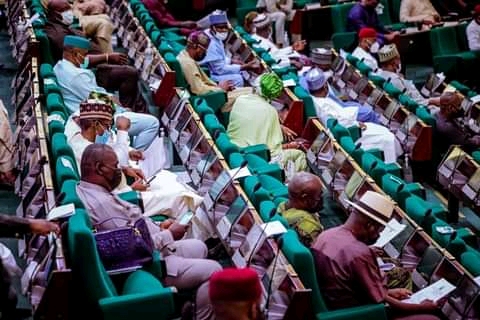
The bill is being sponsored by Hon. Joseph Asuku Bello, representing Adavi/Okehi Federal Constituency of Kogi State.
In his lead debate Engr. Bello said over the years, the growing rate of unemployment, especially of the teeming young population, is alarming and worrisome.
“For example, data for the second quarter of 2020 from the National Bureau of Statistics, reveals that about 21.7 million Nigerians are unemployed, out of which a staggering 13.9million of them (which is more than the population of Rwanda and several other African countries), are youths within ages of 18 to 30 years. Unfortunately, these statistics are predicted to grow even worse, as the frightening state of insecurity, dwindling oil prices and dire consequences of COVID-19 pandemic, continue to take toll on our economy.
“Mr. Speaker, one often-mentioned reason for the high rate of youth unemployment in the country is our educational system, which experts say, is designed to produce graduates for white-collar jobs rather than becoming entrepreneurs and employers of labour and unfortunately, this has led to unabated poverty, which in turn has spiked widespread insecurity such as terrorism, kidnapping, robbery and other violent crimes across the country,” he said.
He agreed with the saying that ‘an idle mind is the devil’s workshop’.
According to him, “the above dire situation therefore requires that Parliament should urgently come up with legislative instruments that will fine tune our educational system. and this is what the Bill before this hallow chamber is about.
“This Bill in essence, seeks to mainstream the study of vocational subjects such as Woodworks, Tailoring, Catering, Photography, Videography, Business Studies, Printing and Stenography, Farming and Agriculture, Automobile, ICT, Electrical/Electronic works, just to mention a few, into our core educational system right from JSS to SSS level, in such ways as to transform all our secondary schools into ‘’skill acquisition centres’’ and by so doing we will be ‘catching them young’.
“In other words, it is preparing our young people for employment in the workplace by equipping them early enough, with the right mindset as well as with the right job-specific and employability skills, which will connect them with the business community, either as workers or as entrepreneurs and small business owners.
“Mr. Speaker, this is the globally proven route to take, because virtually every thriving economy world over, is anchored and sustained by small businesses and entrepreneurial spirit and one sure foundation for that to happen, is to fully integrate the vocational training system into the core educational system of that economy,” he said.
He said that is what is going on in successful economies such as those of U.S, China, India and Organization for Economic Cooperation and Development (OECD) countries, to mention but a few, where the educational system is well developed to feed their ever growing network of small businesses, with the right human capital that is well equipped with the right attitude, knowledge and skills.
He said “In essence Honourable Colleagues, this Bill I am proposing before us today, is one major legislative instrument that can be used in substantially re-ordering the outcomes of our educational system in such way as to stimulate sustainable growth and development of small businesses and entrepreneurship in our dear country.
“The Bill intends to: Make the development and teaching of vocational subjects compulsory for all secondary schools (whether public or private), failure of which attracts penalty as provided in Sections 1 and 2 of the Bill.
“Make it mandatory for every secondary school graduate to have at a credit pass in at least one vocational subject as prerequisite for further studies in higher institutions in Nigeria as provided for Section 1(2) of the Bill.
“Mr. Speaker, the overall outcome of the Bill is to produce a legislative instrument that will back the efforts and policies of government, especially with regards to the effective implementation of the national vocational education and training policy at all levels of government.
“In summary Mr. Speaker, when this Bill becomes an Act, it is capable of: At the individual level: Making our youths more employable
“Making them self-reliant
“Improving their income, productivity and standard of living
“At the community, subnational and national levels: The Act will reduce the rate of Unemployment and this in turn will reduce poverty, youth restiveness, insecurity and crimes. It will stimulate socioeconomic growth”
“Mr. Speaker and dear Honourable Colleagues, considering the importance of vocational education as strategy for socioeconomic development, I sincerely crave your support for this Bill to scale through, because I strongly believe that this Bill when passed, will make all operators and stakeholders of our educational system, to give vocational education and training its pride of place, rather than the lip service attention that it currently receives,” he said.