
Twenty-four Israeli soldiers were killed in Israel’s worst day of losses in Gaza, the military said on Tuesday, as its forces encircled southern Gaza’s main city, trapping Palestinian residents trying to flee.
Israel said the aims of its war against the Hamas movement that runs Gaza were unchanged and that efforts were being made to bring about the release of more than 100 Israeli hostages.
Military spokesman Rear Admiral Daniel Hagari said 21 soldiers were killed when two buildings they had mined for demolition exploded after militants fired at a nearby tank. Three soldiers were reported killed in a separate attack.
“Yesterday we experienced one of our most difficult days since the war erupted,” Prime Minister Benjamin Netanyahu said.
“In the name of our heroes, for the sake of our lives, we will not stop fighting until absolute victory.”
Asked about media reports that a ceasefire deal was being discussed, after Qatar said mediation efforts were ongoing, Israeli government spokesperson Eylon Levy said the war’s goals were unchanged.
The destruction of Hamas’ governing and military capabilities in the Gaza Strip and the return of all the hostages,” he said.
“There will be no ceasefire that leaves the hostages in Gaza and Hamas in power.”
Levy declined to elaborate on efforts to free the hostages, who were taken to Gaza following the Oct. 7 rampage in which Hamas and other militants killed some 1,200 Israelis – the trigger for the war. Levy said lives were in the balance.
CIVILIAN ESCAPE ROUTES BLOCKED
The soldiers’ deaths came the day the Israeli Defence Forces (IDF) launched their biggest operation in a month, to seize remaining parts of Khan Younis, Gaza’s main southern city, which is sheltering hundreds of thousands of displaced Palestinians.
“Over the past day, IDF troops carried out an extensive operation during which they encircled Khan Younis,” the military said, adding that they had “eliminated” dozens of fighters.
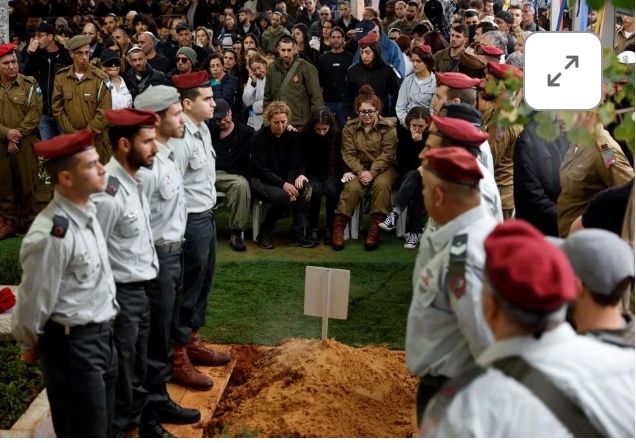
Meanwhile, families and friends mourned the soldiers at funerals across Israel, touching coffins draped in the national flag and hugging one another in their grief.
Israel’s military chief of staff, Herzi Halevi, made a televised statement after visiting the location of the blast.
“Today we feel the great and painful price of war but the one we are fighting now is vital and just,” he said.
Though the war still has overwhelming public support in Israel, discontent is emerging with Netanyahu’s strategy – annihilating Hamas but with only vague discussion of what should follow.
On Saturday, Netanyahu said Israel could not give up security control over “the entire territory west of the Jordan River”, a requirement that he acknowledged was at odds with Palestinian sovereignty – the bedrock of the two-state solution advocated for decades by Israel’s main ally, Washington.