
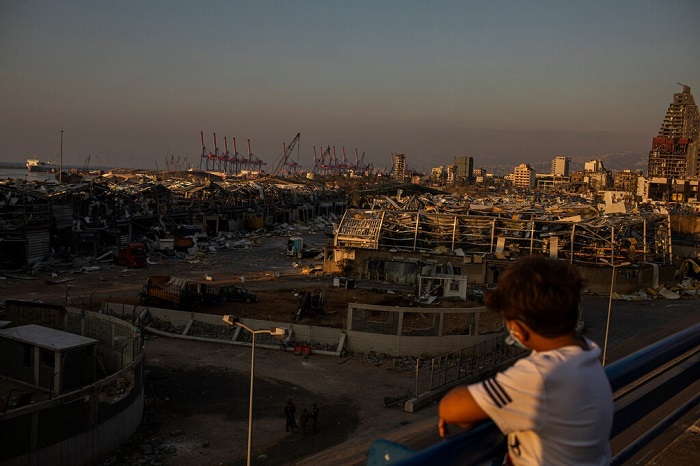
Lebanon’s cabinet resigned on Monday, opening up new political uncertainty as the country struggles with a crippling economic crisis and reels from an enormous explosion last week that ravaged swaths of the capital, Beirut.
The resignation of the government reflected how deeply last week’s explosion — which killed more than 150 people, wounded 6,000 and left hundreds of thousands homeless — has rattled the small Mediterranean nation. Lebanon was already struggling with deep economic and political crises before the blast caused billions of dollars in damage to Beirut.
“We are taking a step back to stand with the people, to wage the battle for change with them,” said Prime Minister Hassan Diab, in a televised address. He blamed his political foes, without naming them, for thwarting his efforts to fix Lebanon’s problems.
In recent days, Beirut has been rocked by protests that have turned areas of downtown into battle zones between demonstrators and the security forces. Even before the announcement by Mr. Diab, who has been in office since January, new clashes had erupted as protesters sought to storm the Parliament.
Demonstrators wearing masks and goggles climbed up barricades near the Parliament and hurled stones at riot police officers, who fired volleys of tear gas that wafted through downtown for the third time in three days.
The protesters said Mr. Diab’s resignation fell far short of their demands for the ouster of the country’s political elite, many of whom gained prominence during Lebanon’s brutal 15-year civil war, which ended in 1990.