
BY OUR CORRESPONDENT
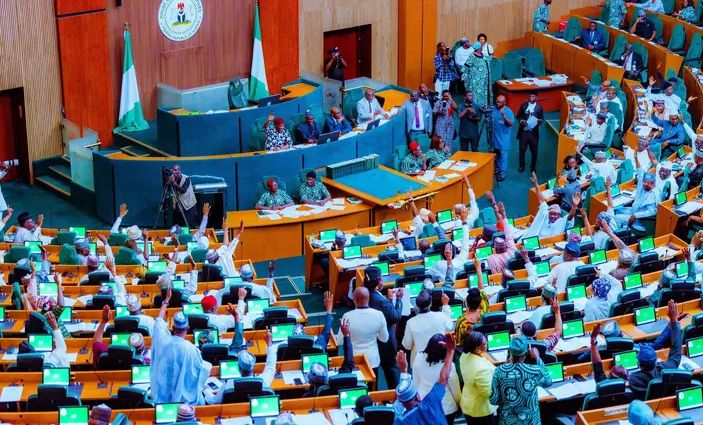
The House of Representatives on Wednesday urged the Federal Government to embark on strategic drone industrialisation policy to strengthen Nigerian defence
manufacturing capacity:.
The Green Chamber urged the Federal Government to provide structured capital support to verified Nigerian drone manufacturing companies, including Beirech UAS, Terra Industries, Elites Group,
Pro-force, and AFIT—through the Bank of Industry, the Defence Industries Corporation of
Nigeria (DICON), and other appropriate financing vehicles to enable them to scale
operations and meet military procurement standards;
The House’s resolution was sequel to a motion by Hon. Ademorin Kuye, Chairman, House Committee on Public Assets during the plenary session on Wednesday.
He noted that Nigeria faces persistent and evolving security threats such as terrorism, banditry, kidnapping, insurgency, and pipeline vandalism, which have continued to challenge the operational capacity of Nigeria’s Armed Forces and security agencies;
He stated that Unmanned Aerial Vehicles (UAVs), commonly known as drones, have become indispensable tools of modern warfare, intelligence gathering, surveillance, and counterinsurgency operations globally and that non-state armed groups, including Boko Haram and the Islamic Stateof West Africa Province (ISWAP), are already deploying commercial drones against Nigerian
troops;
“Nigeria has taken commendable early steps in indigenous drone manufacturing,
including the development of the Tsaigumi UAV by the Nigerian Air Force Institute of Technology (AFIT) in 2018;
“Concerned that Nigeria with a pool of engineering talent, a growing technology entrepreneurship ecosystem, existing military-industrial partnerships, and the largest economy in Africa possesses
the foundational conditions to be the hub for drone technology, provided there is structured
government policy, capital, and legislative support,” Kuye said
He also expressed concerns that Nigeria’s drone manufacturing ecosystem remains largely private-sector driven,
lightly capitalized, and insufficiently supported by structured state policy, technology transfer
frameworks, legislative incentives, or dedicated defense industrial zones, thereby limiting its scale, sophistication, and strategic impact.
The House mandate its Committees on Defence, National Security and Intelligence, Science and Technology, Industry and Commerce to develop and adopt a National Drone industrialisation policy that establishes a clear roadmap for growing Nigeria’s drone
manufacturing sector from its current entrepreneurial stage to a structured, state-supported strategic industry;
The House also mandated the Committees on Defence and National Security and Intelligence to work with the Nigerian Military and relevant agencies to identify and formalize technology
transfer agreements with reputable international drone manufacturers, mandating the training of Nigerian engineers, localization of production, and progressive reduction of
imported components;
Similarly , the House mandated the Committees on Defence, Industry and Commerce to work with relevant
agencies to create and designate dedicated Defence Industrial Zones for drone
manufacturing, research, and maintenance, backed by appropriate fiscal incentives,
infrastructure support, and regulatory frameworks to attract both foreign and local investors;
The green chamber similarly, mandated the Committees on Defence, National Security and Intelligence, Industry, Commerce, and Science and Technology to undertake a legislative review of existing laws governing defence procurement, local content, aviation, and investment incentives, with a
view to enacting or amending legislation that creates a conducive environment for drone
industrialisation, including tax exemptions and protection of intellectual property developed
by Nigerian engineers and report within four (4) weeks for further legislative action