
BY OUR CORRESPONDENT
The House of Representatives on Thursday 13th March, 2025 considered and adopted the report of its Committee on Finance on the four Tax Bills.
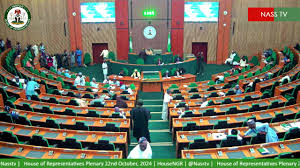
The tax bills presented to the two chambers of the National Assembly by the Executive Arm have generated a lot of controversies in recent times.
The report was presented by the Chairman, House Committee on Finance, Hon. James Abiodun Faleke. He gave the synopsis of each of the four bills before they were considered clause by clause during the Committee of the Whole presided by the Speaker, Rt. Hon. Abbas Tajudeen Phd.
The bills include the Nigeria Tax Bill, Nigeria Tax Administration Bill, Nigeria Revenue Service Establishment Bill and Joint Revenue Board Establishment Bill.
Some of the areas that generated controversies but were amended include inheritance tax, Value Added Tax (VAT) rate and distribution formula, and also the clause on continuous funding of TETFUND, NASENI, and NITDA from the development levies fund.
Amendments were carried out on each of the four bills with the following long title:
“A Bill For an Act to Provide for the Assessment, Collection of, and Accounting for Revenue Accruing to the Federation, Federal, States and Local Governments; Prescribe the Powers and Functions of Tax Authorities, and for Related Matters (HB.1756)
“A Bill for an Act to Repeal the Federal Inland Revenue Service (Establishment) Act, No.13, 2007 and Enact the Nigeria Revenue Service (Establishment) Bill to Establish Nigeria Revenue Service, charged with Powers of Assessment, Collection of, and Accounting for Revenue Accruable to the Government of the Federation and for Related Matters (HB.1757)
“A Bill for an Act to Establish Joint Revenue Board, the Tax Appeal Tribunal and the Office of the Tax Ombud, for the Harmonisation, Coordination and Settlement of Disputes arising from Revenue Administration in Nigeria and for Related Matters (HB.1758)
“A Bill for an Act to Repeal Certain Acts on Taxation and Consolidate the Legal Frameworks Relating to Taxation and Enact the Nigeria Tax Act to Provide For Taxation of Income, Transactions and Instruments, and for Related Matters (HB.1759).
Some section of bills read as follow:
(a) 10 per cent to the Federal Government;
(b) 55 per cent to the State Governments and the Federal Capital Territory; and
(c) 35 per cent to the Local Governments.
“The amount of the VAT revenue standing to the credit of states and local governments shall be distributed among them on the following basis: Equally – 50 per cent, Population – 20 per cent and Consumption – 30 per cent.
“For the purpose of this section, consumption is determined by the place of consumption, irrespective of where the return is filed.”
The House also rejected the proposal for the incremental review of VAT rates and approved the current 7.5 per cent VAT rate to be sustained.
This was one of the most debated issues during the public hearing where there was a proposed increase in VAT from 7.5 per cent to 15 per cent by 2030
The House also deleted the use of the controversial word, “ecclesiastical” from one of the clauses and replaced it with “religious”.
The House further adopted the clause on continuous funding of TETFUND, NASENI and NITDA from the development levies fund.
The legislators approved the recommendation that agencies such as TETFUND, NITDA, and NASENI continue to receive funding, extending the benefits of the four per cent development levy fund to additional agencies.
The House also approved the exemption of military salaries from income tax, saying this is to acknowledge the sacrifices by the military personnel.
The lawmakers imposed stiff penalties, including a two million fine and a maximum three-year jail term for individuals or corporate entities found guilty of attempting to bribe or unduly influence tax officials.
Another key amendment to the bills sent by the President was the restriction placed on the President’s and Governors’ powers to grant tax waivers. The House approved that any such exemptions must now be approved by the National Assembly or State Houses of Assembly.
Similarly, the Accountant-General of the Federation must now seek legislative approval before deducting unremitted revenue from government agencies according to the approved legislation.
There were concerns regarding the potential reintroduction of inheritance tax.
The lawmakers, however, removed provisions that could have been interpreted as introducing an inheritance tax, clarifying that income from inherited assets before distribution will not be taxed.
Section 4 of the Nigeria Tax Bill, 2025, was amended to read: “Income of a family recognised under any law or custom in Nigeria as family income in which the several interests of individual members of the family cannot be separately determined, excluding income on inherited assets before distribution.”
The House also addressed the proposed increase in VAT. While there were proposals to raise the VAT rate to 10 per cent by December 31, 2025, and subsequently to 15 per cent by 2030, the House approved a 7.5 per cent rate.
The version of the bills adopted and passed by the Senate will be harmonised with that of the House of Representatives and sent to President Tinubu to sign it into law.